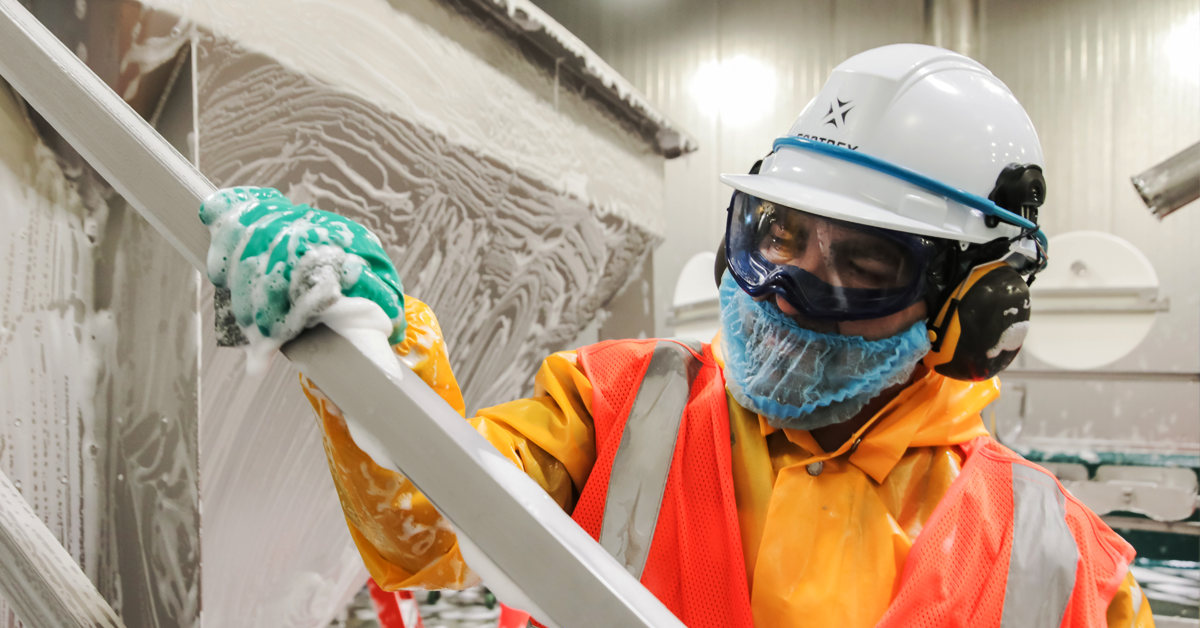
At Fortrex, we understand what it takes to keep families, food, and facilities safe. When most people think about food safety, they don’t often consider the level of complexity or risk involved behind the scenes. Sanitation is more than just cleaning. It’s a critical part of the operation that happens after long production days, where timing, coordination, and execution all have to come together.
Sanitation is one of the most important and demanding jobs in any facility, and when it’s not done right or on time, the impact is immediate.
The True Cost of Downtime
Every minute of downtime can disrupt operations, delay production schedules, and impact overall output. In facilities running high volumes daily, even small delays can have a ripple effect across the entire operation.
That’s why at Fortrex, the focus is not just on cleaning, but on executing sanitation in a way that supports productivity and keeps operations moving.
Here are some of the most common causes of downtime in sanitation and how we approach them.
1. Water Loss: A Critical Disruption
Water is essential to the sanitation process. Without it, operations stop.
Water loss can happen unexpectedly, and when it does, response time matters. Fortrex teams are trained to act quickly, implement contingency plans, and work closely with plant partners to minimize disruption. Preventative maintenance, routine system checks, and clear escalation processes are all part of reducing both the likelihood and the impact.
2. Production Interruptions: Small Variances, Big Impact
Interruptions in production can happen at any time, sometimes from something as small as a slight variance in product weight. For example, a chicken exceeding its expected weight by just a few pounds can disrupt equipment and slow down the line.
While it may seem minor, these types of issues can create a ripple effect that impacts sanitation timing and overall efficiency.
In a typical production day, some plants may process up to 21,500 hogs across two 9-hour shifts. When you break that down into finished products like pork chops or ribs, even a small delay can quickly scale into a much larger issue.
Fortrex teams stay flexible, adjusting workflows in real time and working closely with operations teams to keep sanitation on track and completed within the required window.
3. Staffing and Scale: Planning for the Unexpected
Facilities require significant coordination and manpower, especially at scale. A single gap in coverage can impact the entire sanitation process.
That’s why staffing plans are built with contingency in mind, accounting for last-minute callouts or unexpected challenges before they become problems.
Communication is also equally important. Each shift typically begins with a structured meeting to align responsibilities, equipment, and priorities. Pre-shift walkthroughs help identify potential issues early, before they become larger problems.
Understanding customer KPIs is central to how Fortrex measures success. “Our customers operate on different schedules, some running five days a week, others seven. That’s why we stay closely aligned through weekly conversations focused on KPIs and performance metrics to ensure we’re consistently meeting their operational goals.”
Ongoing alignment between Fortrex teams and facility partners helps ensure everyone is working toward the same goal: a smooth, efficient sanitation process.
4. Equipment Challenges: Training and Ownership Matter
Damaged or malfunctioning equipment doesn’t always have an immediate fix, which is why preparation matters.
“The biggest way to prevent equipment damage starts with alignment. Our site managers and supervisors work closely with second shift to ensure everything is properly covered, electrical is protected, and timing is clearly defined before sanitation begins. We also follow documented walkthrough procedures to make sure nothing is missed.”
Fortrex invests heavily in training so teams are prepared to handle a range of scenarios. From proper washing techniques to standardized setup and teardown procedures, every step is designed to support efficiency and safety.
Strong shift handoff processes also help maintain continuity and reduce the risk of delays or miscommunication.
Delivering Without Disruption
For over 50 years, Fortrex has prioritized delivering on time and without disruption. That starts with understanding the sanitation process, investing in training, and continuously improving how work gets done.
At its core, sanitation is about more than cleaning. It’s about problem solving, process optimization, and making sure operations can start again safely and on time.
Because in this industry, downtime isn’t just a delay. It’s a risk.
And when downtime isn’t an option, execution has to be consistent every time.